How AI Is Changing Early Parkinson’s Detection
On this page
Parkinson’s disease (PD) is one of the fastest-growing neurological conditions worldwide, affecting millions of lives and placing a heavy burden on healthcare systems. Traditionally, a clinical diagnosis of Parkinson’s has relied heavily on overt motor symptoms, such as resting tremors, rigidity, and postural instability.
However, by the time these traditional clinical signs manifest visibly, more than 50% of dopaminergic neurons in the substantia nigra have already degenerated. This means traditional diagnostic pipelines often miss the critical window for early intervention. Today, a paradigm shift is underway. Powered by advanced machine learning (ML) and deep learning (DL), artificial intelligence is bridging the gap, transforming how researchers and clinicians detect the preclinical and earliest stages of Parkinson’s disease.
1. The Preclinical Window: Capturing Subtle Motor Markers
Long before a clinical tremor or noticeable gait freezing prompts a doctor’s visit, the nervous system undergoes subtle micro-alterations. Human eyes and standard physical exams can easily miss these micro-changes, but specialized AI algorithms thrive on them.
Recent scientific reviews highlight how computer vision, speech signal processing, and wearable sensors capture subtle, quantifiable preclinical changes (Yang et al., 2025):
- Oculomotor Biomarkers: Computer vision models analyze micro-movements and eye-tracking patterns to flag neurodegenerative slowing years before broad symptoms appear.
- Acoustic and Speech Analysis: Machine learning parses subtle shifts in vocal pitch, articulation speed, and respiratory control that indicate early bulbar involvement.
- Kinetic and Gait Sensors: Wearable accelerometers and smartphone apps track irregular finger-tapping rhythms, handwriting micrographia, and gait variability with remarkable precision.
2. Multimodal Biomarkers and Machine Learning
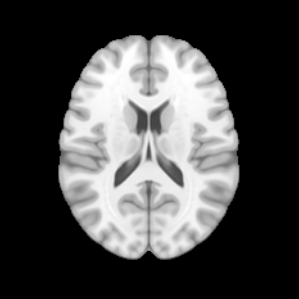
No single test can comprehensively map a complex neurodegenerative disorder. Modern computational frameworks are tackling this by integrating multimodal biomarkers, combining genetics, digital sensor logs, blood-based molecular tests, and imaging data.
Long-running research cohorts such as the Parkinson’s Progression Markers Initiative (PPMI), alongside newer openly shared digital datasets, supply researchers with the robust training ground required to build generalizable AI models. By feeding diverse data streams into algorithms, machine learning models can cross-validate signals, lowering false-positive rates and helping predict disease trajectories before clinical criteria are met.
A single scan is a 3D volume, so a model can look at it slice by slice or as a whole. The slices below come from different heights through the same template brain.
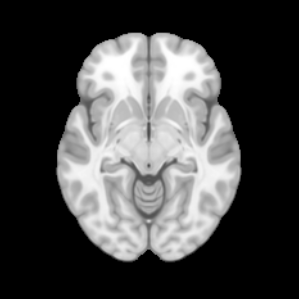
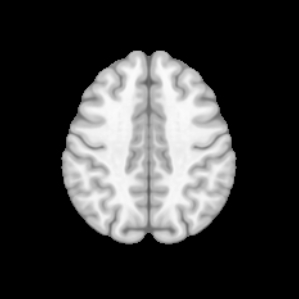
Slice 1: lowest
Slice 2
Slice 3
Slice 4: middle
Slice 5
Slice 6
Slice 7: highest
3. Shifting Toward Remote and Scalable Screening
Traditional diagnostics often involve expensive, invasive procedures such as lumbar punctures (spinal taps) or specialized neuroimaging like dopamine transporter scans, which limit accessibility (Yang et al., 2025).
AI-driven tools enable remote, decentralized assessments. Patients can perform structured motor and cognitive tasks from home devices or smartphones. Because these platforms are scalable and non-invasive, they democratize early screening, allowing primary care physicians and remote clinics to flag high-risk individuals early enough to benefit from upcoming neuroprotective therapies.
Conclusion
The integration of artificial intelligence into Parkinson’s disease research represents a vital evolution from reactive treatment to proactive, precision-driven healthcare. While challenges regarding data heterogeneity, model interpretability, and clinical validation remain, the convergence of computational power and biomarker science promises a future where Parkinson’s can be intercepted before it alters a patient’s life.
References
Yang, N., Liu, J., Sun, D., Ding, J., Sun, L., Qi, X., & Yan, W. (2025). Motor symptoms of Parkinson’s disease: critical markers for early AI-assisted diagnosis. Frontiers in Aging Neuroscience, 17, 1602426. https://doi.org/10.3389/fnagi.2025.1602426